
Malampa Province

Malampa Province is situated, in the most central part of Vanuatu. The province has an estimated population of 41,506 people and a land-area of 2,779km². Its capital is Lakatoro on the island of Malekula. There are three islands in Malampa Province, Malekula, Ambrym and Paama islands. Malampa is perhaps one of the least developed provinces in Vanuatu.
Transport is regular but still difficult at times especially during rainy seasons. Communication is challenging. Infrastructure is limited on these three islands with a few roads and vehicles present on Malekula, Ambrym & Paama. Air Vanuatu provides regular service to these islands. Small “banana boats” are relied upon heavily at some point of landing access, despite frequent rough seas, to access remaining communities.
The difficulty and infrequent level of transport in Malampa Province has resulted in a much higher pricing for locals when they purchase commonly used goods and supplies such as fuel and tinned foods.
Social, Cultural and Economic Potential
Malampa Province has significant social, cultural and economic potential. Relative to other provinces, it has abundant natural resources, some supporting infrastructure and a growing population. The foliage and vegetation is lush and green. The land is immensely fertile and anything grown will take root without any need for fertiliser. People are well-fed and healthy. Incidences of hypertension and diabetes are rare. Each of our islands within has their own unique natural charms and attractions that could be used to bring tourism money to the province.
Productive Sectors
About 80% of the population of Malampa is employed in the subsistence and semi-subsistence agricultural sector. The major commercial crop and livestock activities are centred on copra and beef which together make up 42% of the provincial economy. This sector is by far the largest economic sector of Malampa Province. The retail sector accounts for about 2 % and so is Tourism.
The main cash crops for farmers in Malampa Province include copra, cocoa, kava, livestock, & fish. Presently, kava is a popular agricultural product, especially in Malekula than other two islands – Ambrym and Paama. The island of Ambrym is well known for supplying copra and carvings but will likely to extend to Port Vila and Luganville for possible market access. Nonetheless, the accrued benefits to both farmers and the Council are minimal. It is to that end that the Council has in place plans to regulate in future the industry so that farmers’ concerns are addressed amicably.
Livestock such as cattle, pigs, goats and poultry are restricted by small-scale production. There is potential to develop and improve production in this sector.
Commercial fishing is also under-developed, due mainly to infrastructural constraints and in particular, to lack of easy access to fishing gear and boats, lack of storage and marketing facilities, and the lack of commercial fishing Entrepreneurial Skills. The establishment of fisherman association in different areas will determine the industry in the next three years. There is little commercial forest exploitation and local supply plantations (LSPs) have been established at several sites but timber cannot be marketed. There is potential to operate small mobile mills on the three islands but the issues and challenges relating to marketing need to be assessed and addressed in greater detail.
MPGC Administrators
Malampa province has 10 Area Councils with each Area Council having an administrator.
Marsten Tias

South East Ambrym Area Council
Tel: (+678) 5616108/ 7115358
Email: This email address is being protected from spambots. You need JavaScript enabled to view it.
Bong Massing

West Ambrym Area Council
Tel: (+678) 5902191/ 7756485
Email: This email address is being protected from spambots. You need JavaScript enabled to view it.
Sairos Willie
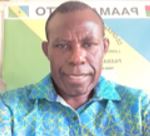
Paama Area Council
Tel: (+678) 5347850/ 7313127
Email: This email address is being protected from spambots. You need JavaScript enabled to view it.
Gerald Tamau

South West Malekula Area Council
Tel: (+678) 5631573/7614776
Email: This email address is being protected from spambots. You need JavaScript enabled to view it.
Jerryson Hosea
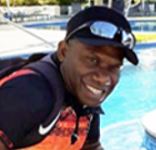
North West Malekula Area Council
Tel: (+678) 5413627/ 7777802
Email: This email address is being protected from spambots. You need JavaScript enabled to view it.
Joselito Atpatun

South East Malekula Area Council
Tel: (+678) 5343204/ 7102069
Email: This email address is being protected from spambots. You need JavaScript enabled to view it.
Lulu Leymang
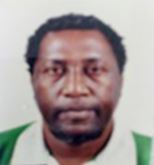
South Malekula Area Council
Tel: (+678) 5293462
Email: This email address is being protected from spambots. You need JavaScript enabled to view it.
Jackson Willie

North Ambrym Area Council
Tel: (+678) /5343604/7636505
Email: This email address is being protected from spambots. You need JavaScript enabled to view it.
Vacant

North East Malekula Area Council
Vacant
Central Malekula Area Council
Welcome!

Welcome to the website of the Malampa Provincial Government Council!
Since the formation of the Council in 2021, we have strived to provide avenues for all that are actively involved and participate to develop a secured, strong and healthy Province
We aim to achieve this, with a particular emphasis on establishing partnerships and new trade links within and outside the province taking into consideration:
- Christian principals
- Cultural and traditional values
- Gender equity
- Respect for biodiversity (Environment)
We hope you find this website education and information as my council focuses on “bringing the Government closer to the People”.
Tankio tumas,
Hon. Sam Abel Aisick
President of the Malampa Provincial Government Council
Our Staff
Currently the MPGC has a total of 49 working staff, including Area Council staff, 3 officers that were seconded from the PSC (SG, Planner & Accountant), and sea and air departure tax officers as well as 21 councilors.
| Staff | Male | Female | Total |
|---|---|---|---|
|
Market house |
1 |
2 |
3 |
|
Airport Departure Tax |
0 |
1 |
1 |
|
Litzlitz wharf departure tax |
1 |
0 |
1 |
|
Workshop |
2 |
0 |
2 |
|
Administration |
7 |
3 |
10 |
|
Area Secretary |
5 |
0 |
5 |
|
Area Administrators |
6 |
0 |
6 |
|
Councilors |
21 |
0 |
21 |
|
|
43 |
6 |
49 |
Our Area Councils
Malampa province has 10 Area Councils with each Area Council having a secretary and administrator.
| Island | Area Council | Area Secretary | Area Administrator |
|---|---|---|---|
|
Malekula |
North West |
Wesley Lampi |
Jerryson Hosea |
|
North East |
Vacant |
Vacant |
|
|
Central |
Laurent Malres |
Vacant |
|
|
South East |
Edwin Manrol |
Joselito Atpatun |
|
|
South |
Vacant |
Lulu Leman |
|
|
South West |
Alesta Kenson |
Gerald Tamau |
|
|
Ambrym
|
North |
Vacant |
Jackson Willie |
|
West |
Vacant |
Bong Massing |
|
|
South East |
Kerbi Norman |
Masten Tias |
|
|
Paama |
Paama |
Vacant |
Siros Willie |
MPGC Councilors
The Malampa Provincial Government Council consists of 21 councilors representing Malekula, Ambrym and Paama Island.
Hon. Sam Abel Aisick

President, Paama Island
Hon. Wilford Patunvanu

Vice President, Malekula Island
Hon. Aisson Sali Mahit
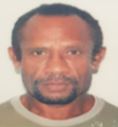
Paama Island
Hon. Alfred Rolland
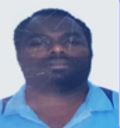
Malekula Island
Hon. Benly Thomas
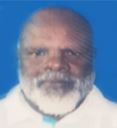
Malekula Island
Hon. Casimir Tevanu

Malekula Island
Hon. David Bule Tubuvivi

Ambrym Island
Hon. Graham Nombong
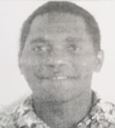
Malekula Island
Hon. Jacky Tavbon Haisok

Malekula Island
Hon. Jimmy Japheth
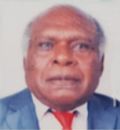
Ambrym Island
Hon. Johnlui Betamat Kalmandu

Malekula Island
Hon. Karlos Kali
Malekula Island
Hon. Lazar Molonturala
Malekula Island
Hon. Mawa Sitty Morris

Ambrym Island
Hon. Obed Bongtungon
Ambrym Island
Hon. Paul Kalihabath
Malekula Island
Hon. Perry Meltekue

Malekula Island
Hon. Rodney Tolish

Malekula Island
Hon. Tangen Rambay

Malekula Island
Hon. Warren Stephen Amrunnugk
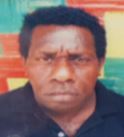
Malekula Island
Hon. Willie Balmet

Malekula Island
Mission & Vision
Vision
With clear perception and in anticipation to empowering the Provincial Government with infinite access to service delivery to be a socio - economically self-reliant Province. That promotes a conducive working environment and successfully attracts partnerships while at the same time maximizes economic and social gains to local communities through sustainable utilization of its resources, taking into account the people’s welfare, cultural values, Christian values and traditional respect for the environment. Resilient governance linking to decentralization for a vibrant, safe and secure Provincial Government and its population
Mission
To provide avenues for all actively involve and participate to developing a secured, strong and healthy Province with emphasis on establishing partnership and new trade links within and outside the province taking into consideration: Christian principals, Cultural and traditional values, Gender equity and Respect for biodiversity (Environment). In the end focusing on “Bringing the Government closer to the People”.
Aims and Objectives
- To continue support in implementing the decentralization plan of the Vanuatu government.
- To Coordinate and implement community baseline projects in all 10 Area Councils through ACs & AAs in collaboration with Key Stakeholders.
- To Develop and Strengthen Governance institution and system for better service delivery to the people of MALAMPA .
- To Develop approaches that is in consistent with financial resources for MALAMPA Provincial Government Council.
- To continue support for a resilient governance linking to decentralization for a vibrant, safe and secure Provincial Government and its population.
- To Develop strong partnership with all Provincial Stakeholders to achieve common plans within Malampa Provincial Government.
The Council
Vanuatu is a unitary state with three levels of government – the Central Government, Provincial Council and Area Councils. Provincial councils are established by virtue of the provisions of the Local Government Act, the Decentralization Act and Physical Planning Act. The Vanuatu Constitution also provides for a decentralized system of government.
The Malampa Provincial Government Council (MPGC) has continued to emphasize the importance and centrality of traditional governance (custom) to a happy and harmonious co-existence in the province. The illustration below shows the different levels and relationships between them at provincial level.
The MPGC consists of Malekula, Ambrym and Paama Island and the Headquarter is located at Lakatoro, Malekula.